


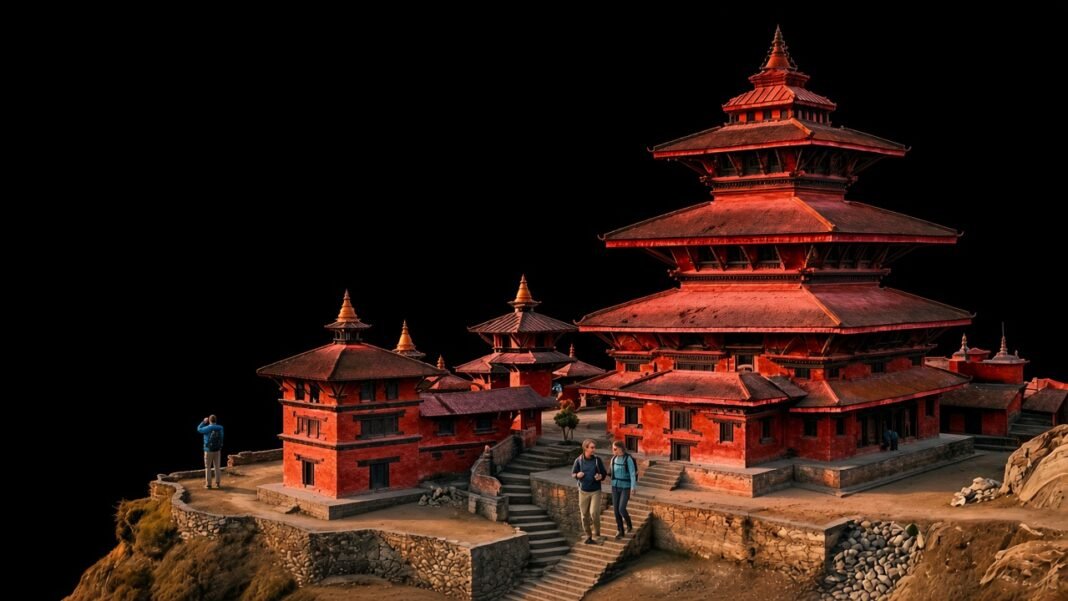
Nepal is a country with a strong connection to the Himalayas, ancient traditions and a rich cultural history. Located in South Asia, the country is known around the world for its mountains, especially Mount Everest. But Nepal is much more than a destination for mountain lovers. Its history, people, religions, cities and natural landscapes make it a unique country in the region.
Nepal is officially known as the Federal Democratic Republic of Nepal. Kathmandu is its capital and one of the country’s most important cultural and historical centres. The country has gone through major political changes over the years and is now a federal republic.
Nepal at a Glance
| Category | Information |
|---|---|
| Country | Nepal |
| Official Name | Federal Democratic Republic of Nepal |
| Capital | Kathmandu |
| Region | South Asia |
| Official Language | Nepali |
| Currency | Nepalese Rupee |
| Government | Federal Democratic Republic |
| Famous For | Himalayas and Mount Everest |
| Major Economic Sector | Tourism |
| Internet Domain | .np |
| Calling Code | +977 |
Where Is Nepal Located?
The Himalayan Country is situated in South Asia between India and China. It is a landlocked country, meaning it does not have direct access to the sea.
The country’s geography changes dramatically from south to north. The southern part includes the flat Terai region, while the middle area is made up of hills and valleys. Farther north, the land rises into the Himalayan mountain range.
Read more:
- Nepal-Tibet Border Floods: What Happened and What We Know
- Bangladesh Ready to Assist Nepal After Deadly Floods and Landslides
This unusual geographical variety gives The Himalayan Country several different landscapes within a relatively small area.
Kathmandu, the Capital of Nepal
Kathmandu is the capital of The Himalayan Country and an important centre of government, business, culture and tourism.
The Kathmandu Valley has a very long history. Archaeological discoveries from the valley indicate that people have lived in the Himalayan region for thousands of years. The valley later developed into an important centre of settlements, kingdoms, religion and art.
For visitors, Kathmandu is often the starting point for exploring other parts of The Himalayan Country. The city is also known for its historic buildings, temples and traditional culture.
The Geography of The Himalayan Country
The Geography of Nepal is one of its most interesting features.
The country is commonly associated with three major geographical areas:
Himalayan Region
The northern part of The Himalayan Country contains the high Himalayan mountains. This area includes some of the world’s highest peaks and is one of the main reasons Nepal attracts visitors from around the world.
Hill Region
The central part of the country contains hills, valleys and forests. Many towns and communities are located in this region.
Terai Region
The southern Terai is a lowland area close to the Indian border. Important rivers, including the Narayani and Karnali, flow through or near this region.
The combination of these three areas gives The Himalayan Country a wide range of natural environments.
Nepal and Mount Everest
When the name Nepal comes up, Mount Everest is often one of the first things people think about.
Mount Everest is the world’s highest mountain and is located in the Himalayas on the Nepal-China border. The mountain has made The Himalayan Country famous among climbers, trekkers and adventure travellers.
However, Everest is only one part of The Himalayan Country mountain landscape. The country has many other high peaks, trekking routes and mountain communities.
For The Himalayan Country, the Himalayas are not simply a tourist attraction. They are also an important part of the country’s natural environment and identity.
A Brief History of Nepal
The Himalayan Country has a long history that goes back thousands of years. Evidence discovered in the Kathmandu Valley suggests that people were living in the Himalayan region around 9,000 years ago. The source also mentions the presence of Tibeto-Burman communities in Nepal around 2,500 years ago.
Over the centuries, different communities and ruling groups became part of the region’s history.
The Kathmandu Valley later became an important political and cultural centre. Different kingdoms ruled different parts of the region before the country became more unified.
The history of The Himalayan Country therefore includes ancient settlements, kingdoms, religious traditions and major political changes.
Nepal’s Political Change
One of the biggest changes in modern The Himalayan Country was the end of its monarchy.
For many years, The Himalayan Country had a king as its head of state. Political changes in the 21st century gradually reduced the role of the monarchy.
In 2008, The Himalayan Country became a republic. This was a major turning point in the country’s modern political history. The country later developed a federal political system.
Today, The Himalayan Country is officially known as the Federal Democratic Republic of Nepal.
People and Culture
The Himalayan Country has a diverse population made up of different ethnic groups, communities, languages and traditions.
Nepali is the official language, but many other languages are spoken throughout the country. This linguistic diversity reflects the country’s long history and varied population.
The Himalayan Country culture is closely connected with religion, family traditions, festivals, music, food and art.
Traditional lifestyles can also vary greatly between the mountains, hills and plains.
Religion
Religion has an important place in Nepalese society.
The people of the Himalayan Country follow different religions and traditions. Hinduism and Buddhism have had a particularly strong influence on the country’s history and culture.
The source describes the Himalayan Country as a secular country and notes the protection of religious and cultural freedom.
Temples, monasteries and other religious sites can be found throughout the country. Many of these places are also important tourist destinations.
Nepal’s Economy
Tourism is an important part of the Nepalese economy. Thousands of people from different countries visit the Himalayan Country every year.
Mountain tourism is especially important because of the Himalayas, trekking routes and Mount Everest.
Visitors also travel to the Himalayan Country to experience its culture, historical locations and religious sites.
Besides tourism, agriculture and other economic activities also contribute to the country’s economy. Nepal’s difficult terrain, however, creates challenges for development and transportation.
Transport in Nepal
Nepal’s mountain landscape makes transportation difficult in many areas.
The country is separated from major sea routes and has challenging terrain, particularly in the hills and mountains. Air travel therefore has an important role in connecting different parts of the country.
The source notes that The Himalayan Country has several airports with paved runways and that air transportation has an important place within the country.
For people travelling to remote mountain areas, air services can be especially useful.
Why Tourism Is Important to Nepal
Tourism is one of the most visible parts of The Himalayan Country international image.
People visit the country for many reasons. Some want to see Mount Everest and the Himalayas, while others are interested in trekking, culture, history and religion.
The country’s natural beauty gives it a strong position in the international tourism industry.
Kathmandu, the Himalayan region and different cultural and religious sites all contribute to Nepal’s appeal.
Nepal’s Natural Beauty
The Himalayan Country natural environment changes greatly across the country.
The south has warmer lowlands, the middle region has hills and valleys, and the north contains the high Himalayas. This means visitors can experience very different landscapes during a trip through the country.
Rivers, forests, mountains and valleys are important parts of the Himalayan Country natural environment.
The Himalayan landscape, in particular, has become one of the country’s most recognizable features.
Nepal’s Place in South Asia
The Himalayan Country has a special geographical position in South Asia because it lies between two of Asia’s largest countries, India and China.
Its location has influenced the country’s history, trade, culture and political relationships.
Despite being a landlocked country, The Himalayan Country has developed strong international recognition because of its natural landscape, cultural heritage and tourism industry.
What Makes Nepal Different?
There are several things that make Nepal stand out.
First, the country is home to Mount Everest and a large part of the Himalayan landscape. Second, it has a long history that includes ancient settlements and kingdoms. Third, The Himalayan Country has a diverse society with different languages, religions and cultural traditions.
The country has also experienced an important political transformation, moving from monarchy to a federal republic.
These features together give Nepal a distinctive identity in South Asia.
The Himalayan Country is a country where mountains, history, religion and culture come together. From the historic Kathmandu Valley to the high Himalayan peaks, the country offers a wide variety of experiences.
Its history stretches back thousands of years, while its modern political system reflects major changes in recent decades. Tourism continues to play an important role, with the Himalayas and Mount Everest attracting visitors from around the world.
For anyone interested in South Asia, mountain culture, history or travel, The Himalayan Country remains a country with a fascinating story and a unique place in the world.