


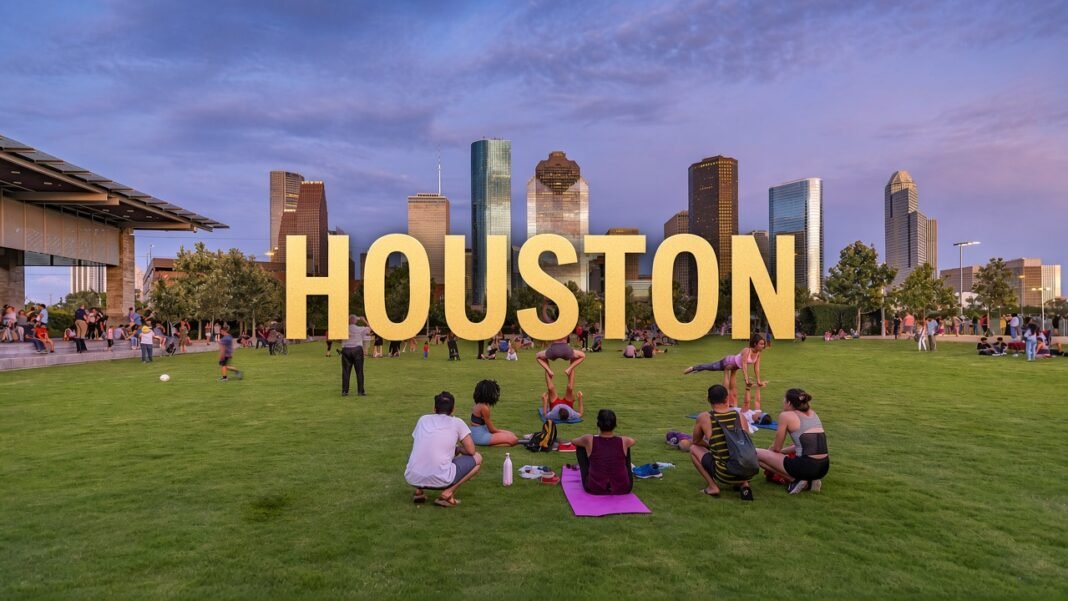
Houston, Texas, is one of the largest cities in the United States. It sits in southeast Texas, close to the Gulf Coast. The city is well known for its energy industry, medical centers, space programs, shipping, businesses, and wide range of jobs.
People from many different backgrounds live in Houston. This mix of cultures can be seen in its neighborhoods, restaurants, schools, and local businesses.
Houston has changed dramatically since it was founded in 1836. The small settlement that grew up near Buffalo Bayou is now one of the largest cities in the United States.
Houston at a Glance
Houston is a major city in Texas, United States. Here are some basic facts about the city:
- City: Houston
- State: Texas
- Country: United States
- Population (2025): 2,397,315
- Founded: August 30, 1836
- County: Harris County
- Land Area: 640.44 square miles
- Time Zone: Central Time
The U.S. Census Bureau estimated Houston’s population at 2,397,315 on July 1, 2025. The 2020 Census counted 2,304,580 people.
Houston is also a very large city by land area. The city has about 640 square miles of land.
Houston is home to people from many cultures. This gives the city a mix of communities, food, traditions, and local businesses.
Where Is Houston, Texas?
Houston is located in southeast Texas. Most of the city is in Harris County. Some parts of the larger Houston area are in nearby counties.
Houston’s location played an important role in its early growth. Buffalo Bayou gave settlers a way to move goods between the city and the Gulf Coast.
Today, Houston remains closely connected to the Gulf Coast. The Houston Ship Channel links the city to Galveston Bay and the Gulf of Mexico. The Port of Houston is also a major part of the local economy.
Houston is at the center of a much larger metropolitan area. It includes many nearby cities and communities outside the Houston city limits. Many people live in nearby communities but travel to Houston for work, school, shopping, or health care.
Houston is also connected to other major Texas cities. Austin is northwest of Houston, while San Antonio is west. Dallas-Fort Worth is farther north. Galveston is southeast of Houston near the Gulf Coast.
History of Houston
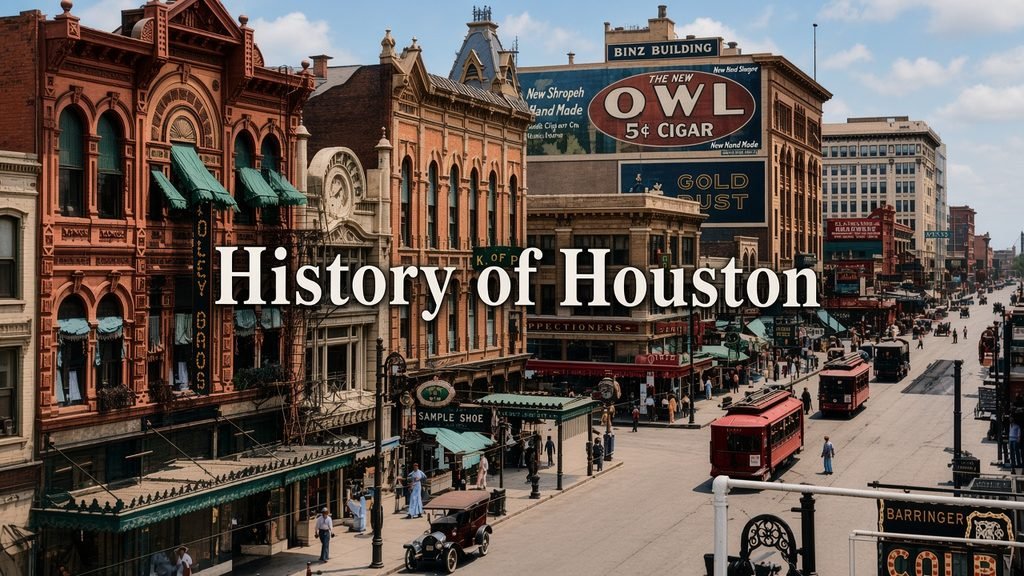
Houston was founded on August 30, 1836. This was only a few months after the Texas Revolution.
Brothers Augustus Chapman Allen and John Kirby Allen founded the city. They bought land near Buffalo Bayou and started building a new town.
The brothers believed the area could become a good place for trade. Buffalo Bayou offered a route toward the Gulf Coast.
They named the new town after General Sam Houston. He was an important leader in Texas history. He also led the Texas army at the Battle of San Jacinto.
Houston soon became important to the new Republic of Texas. In November 1836, it was chosen as the temporary seat of government.
Houston served as the capital of the Republic of Texas for a short time. The government later moved to Austin in 1839.
The city received its official charter in 1837. Trade, farming, shipping, and transportation helped Houston, Texas grow during its early years.
Railroads and the Port
Railroads played an important role in Houston’s growth during the 1850s. New rail lines made it easier to move people and goods around Texas.
The Houston Ship Channel was another major step forward. It opened in 1914 and gave Houston a deeper water route to the Gulf through Galveston Bay.
The new channel helped Houston, Texas become a major port and industrial center. It also made it easier for businesses to ship goods to other parts of the country and the world.
Houston and the Oil Industry
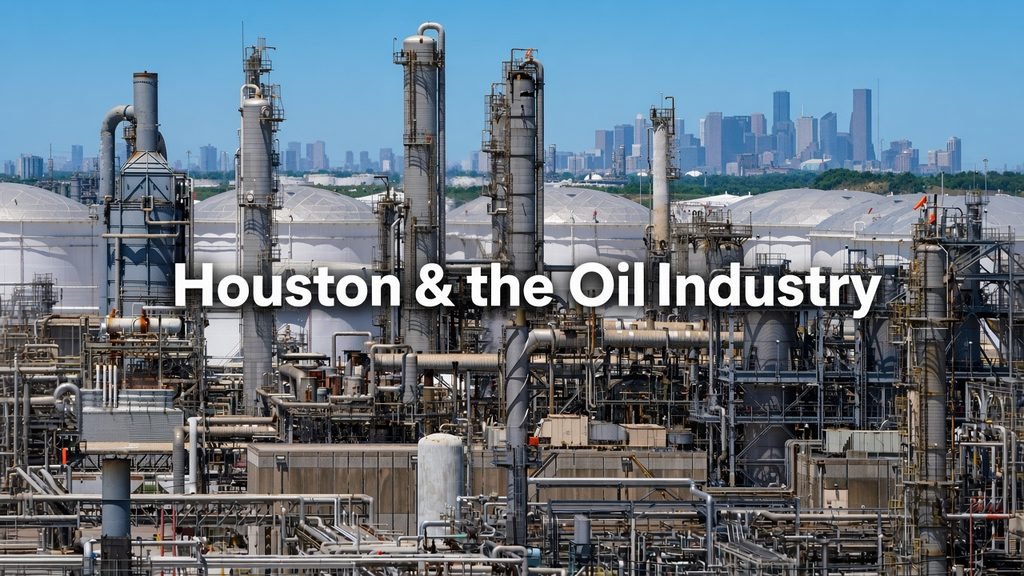
Oil became a major part of Houston’s growth in the early 1900s.
In 1901, oil was discovered at the Spindletop oilfield near Beaumont, Texas. The discovery helped start a major oil boom in the state.
Houston was well positioned to benefit from the rapid growth of the oil industry. The city already had railroads, port facilities, and a growing business community.
Houston was well positioned to benefit from the growing oil industry. Its railroads, port facilities, and access to the Ship Channel helped support the city’s expanding energy business.
However, Houston did not rely only on oil. Over time, other industries also grew in the city. These included health care, aerospace, manufacturing, transportation, and international business.
Today, Houston is an important economic center in Texas and across the United States. Its growth has been supported by its location, port, transportation network, energy industry, and growing range of businesses.
Houston Population and Geography
Houston, Texas, is one of the largest cities in the United States and the largest city in Texas by population. The city has continued to grow over the years. According to the U.S. Census Bureau, Houston had an estimated 2,397,315 residents on July 1, 2025. The 2020 Census counted 2,304,580 people, compared with 2,099,451 in 2010.
Houston Population
Houston’s population is close to 2.4 million people. These numbers cover residents living inside the official city limits. They do not include everyone who lives in the wider Houston, Texas metropolitan area.
Houston is also a diverse city. People from many countries and backgrounds live here. You can see this diversity in the city’s neighborhoods, restaurants, schools, businesses, and local events.
The city has residents of all ages. About 23.4% of Houston’s population is under age 18, while 12.3% is 65 or older. Children under age five make up about 6.7% of the population.
Houston’s population has grown steadily over the years. More than 200,000 people were added between the 2010 and 2020 Censuses, and the city has continued to grow since then.
Income levels are different across the city. The Census Bureau reports a median household income of $64,813 for 2020–2024. Per capita income was $42,430 during the same period. About 19.9% of Houston, Texas residents were below the poverty line.
Houston, Texas Geography
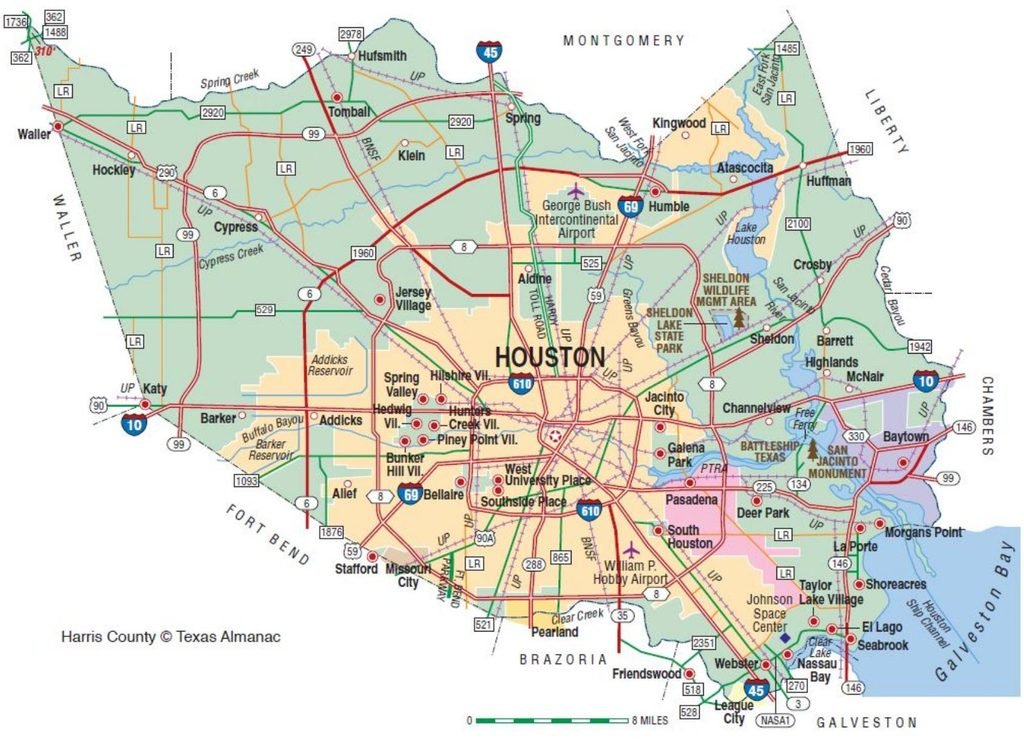
Houston covers a large area. In 2020, the city had about 640.44 square miles of land. It had about 3,598 people per square mile.
Most of Houston is in Harris County. Small parts of the city are also in Fort Bend and Montgomery counties. The Houston Ship Channel connects the city to the Gulf Coast. It also connects the area to Galveston Bay and the Gulf of Mexico.
Houston has mostly flat land and a large network of waterways. These bayous and channels play an important role in the city, especially when heavy rain falls. Some major bayous are Buffalo Bayou, Brays Bayou, Sims Bayou, Greens Bayou, and Halls Bayou. They help move rainwater away from the city, especially during heavy rain.
Flooding is a major concern in Houston, especially during severe storms and hurricanes. Heavy rainfall can quickly put pressure on streets, drainage systems, and bayous. Because of this, flood risk and drainage are important issues for residents and local officials.
Houston Neighborhoods
Houston has many different neighborhoods, and each one has its own style and feel.
Downtown Houston is the city’s main business center. It includes offices, hotels, restaurants, entertainment venues, government buildings, and sports facilities.
Midtown is just south of Downtown. It has many apartments, restaurants, shops, parks, and businesses. It is also easy to get to other parts of the city from here.
Montrose is known for its older homes and apartments. The area also has many restaurants and local shops. It has a unique and lively feel.
The Heights is northwest of Downtown. It is known for its old homes, local shops, restaurants, and parks.
The Museum District is home to major museums and cultural attractions. It is also close to Hermann Park, Rice University, and the Texas Medical Center.
Uptown Houston, Texas is a busy area for business and shopping. It is home to The Galleria, along with many offices, hotels, restaurants, and homes.
Third Ward and the East End are two historic areas of Houston. Both have strong links to the city’s history and local culture.
Houston continues to change as new residents move in and new homes, businesses, and development projects appear across the city. For local news, knowing the area where an event happens can help readers understand the news better.
Houston Texas Economy, Jobs, Education & Transportation
Houston is one of Texas’s major job and business centers. Oil and gas remain important, but the city’s economy also depends on many other industries.
Healthcare, transportation, technology, construction and retail also provide many jobs in Houston, Texas.
Houston Economy and Jobs
Houston has a large job market. The Houston metro area had nearly 3.5 million nonfarm jobs at the end of 2025. The region is expected to add about 30,900 jobs in 2026.
Healthcare, construction, transportation, education and local services provide many jobs.
Energy is still a major part of Houston’s economy. The area has many oil, gas, petrochemical and energy companies. At the same time, other industries are growing. This gives workers more job choices.
Healthcare is a major part of Houston’s economy. The Texas Medical Center brings together hospitals, medical schools, and research centers and is one of the city’s largest employment areas.
Houston also has a busy shipping business. Port Houston and the Houston Ship Channel help move goods to other parts of the U.S. and other countries.
Aerospace is also important to Houston, Texas. NASA’s Johnson Space Center and other companies create jobs in science, engineering and technology.
Houston’s technology sector is growing as well. Companies in the area work in software, artificial intelligence, healthcare technology, and energy technology.
Business Areas in Houston, Texas
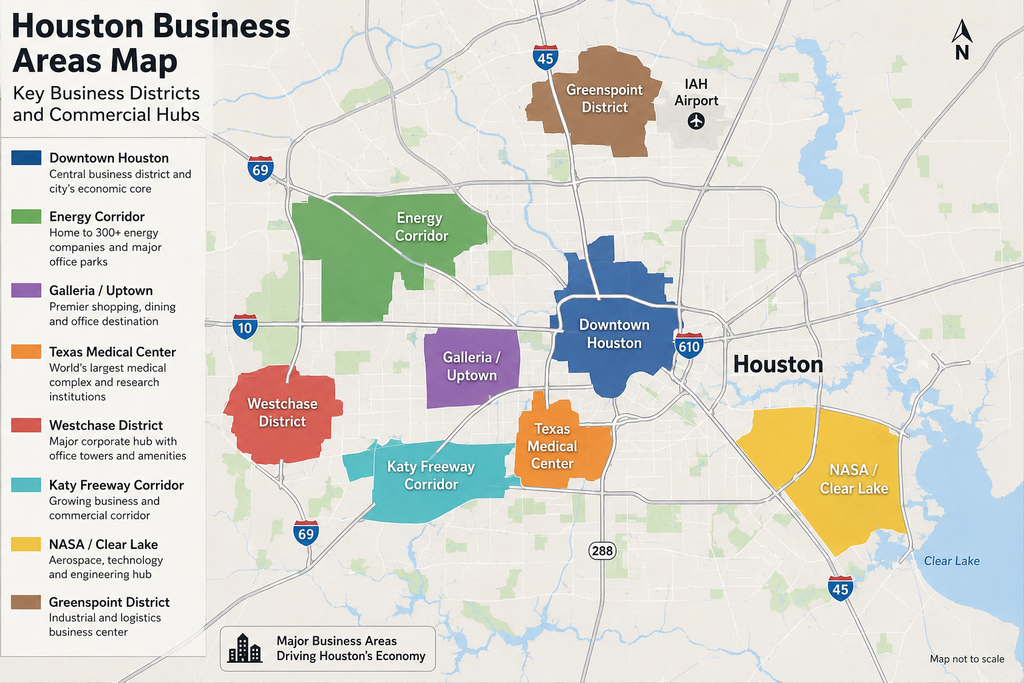
Downtown Houston is one of the city’s main business areas. It has offices, government buildings, hotels, restaurants and many professional businesses.
Houston also has other busy business areas, such as the Texas Medical Center, Energy Corridor, Uptown and Greenway Plaza.
These areas are home to many workers and businesses. They also play an important role in the city’s economy.
Education in Houston
Houston has a wide range of schools, colleges, and universities, including both public and private institutions.
The City of Houston does not run the public school system. Public schools are managed by independent school districts.
The Houston Independent School District, known as HISD, is the largest school district in the city. It has more than 168,000 students and 264 schools.
School districts are different in different parts of Houston, Texas. Families should check which school district serves their home before choosing a school.
Houston also has several major universities. The University of Houston is the city’s largest public research university. It has nearly 49,000 students and more than 300 degree programs.
Rice University, Texas Southern University, the University of St. Thomas and Houston Christian University are also located in Houston.
Transportation in Houston, Texas
Many people in Houston use cars for work, school and daily travel. The city has a large highway system.
Major roads include Interstate 10, Interstate 45, Interstate 69, U.S. 290 and several beltways and toll roads.
Traffic is often heavier during the morning and evening rush hours. Crashes, construction, and bad weather can make the roads even slower.
Public transportation is another option. METRO operates buses, light rail and Park & Ride services in the Houston area.
METRO can be useful for people traveling to downtown and other major parts of the city.
Houston Airports
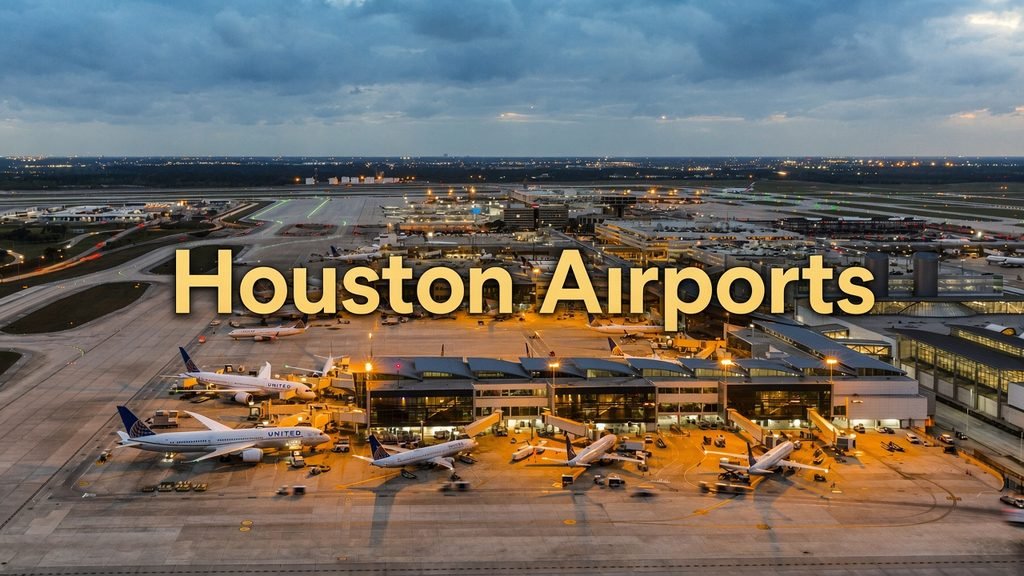
Houston has several airports. George Bush Intercontinental Airport (IAH) is the city’s main international airport.
William P. Hobby Airport (HOU) handles many domestic flights and some international flights. Ellington Airport also supports NASA, military and general aviation activities.
Houston’s airport system handled more than 62 million passengers in 2025. The airports are an important part of the city’s travel and business activity.
For people living in Houston, Texas, traffic and transportation are part of everyday life. Checking traffic before leaving and allowing extra time during busy hours can make daily travel easier.
Houston Weather, Safety, Parks and Attractions
Houston Weather and Climate
Houston has hot and humid summers, while winters are generally mild. Rain is possible throughout the year, and tropical storms can affect the area during hurricane season.
Summer is the hottest season in Houston. June, July, and August are often very hot and humid. Thunderstorms are also common during these months.
On July 22, 2026, the National Weather Service recorded 102°F at Houston’s Hobby Airport. On very hot days, people should drink plenty of water. It is also better to avoid staying outside for too long, especially in the afternoon.
Houston winters are much milder than those in many northern U.S. cities. Snow and long periods of freezing weather are rare. However, cold weather can still reach the city from time to time. Temperatures may change quickly, so checking the local forecast is helpful before going outside.
Heavy rain is common in Houston. A strong thunderstorm can bring a large amount of rain in a short period and lead to flooding on streets and low-lying areas. Houston is mostly flat and has many bayous and drainage channels, so heavy-rain forecasts are important. Drivers should never try to cross a flooded road when the water depth or road condition is unknown.
Hurricane season runs from June 1 through November 30. A tropical storm or hurricane can affect Houston, Texas even without making a direct landfall in the city. Heavy rain, strong winds and flooding can create serious problems. Residents should follow updates from the National Weather Service and local emergency officials.
Houston Crime and Public Safety
Public safety is a major concern in a city as large as Houston. Crime can vary between neighborhoods and can also change over time. Citywide crime figures do not always tell the full story of what is happening in a specific neighborhood or area.
The Houston Police Department (HPD) is the main police agency for the city. HPD provides crime information, police reports and safety resources.
The Houston Fire Department responds to fires and medical emergencies. It also helps with other emergency calls.
If there is a life-threatening emergency, call 911. You can call 911 for police, fire, or medical help anywhere in the United States.
Houston, Texas also uses 311 for many non-emergency city services and local government requests.
HPD publishes crime data for different police districts and areas. Some information may be preliminary, so crime data should be viewed carefully. A busy area can also have more reported incidents because many people live, work or travel there.
For the latest crime news, residents can check HPD updates and local police announcements.
Houston Parks and Recreation
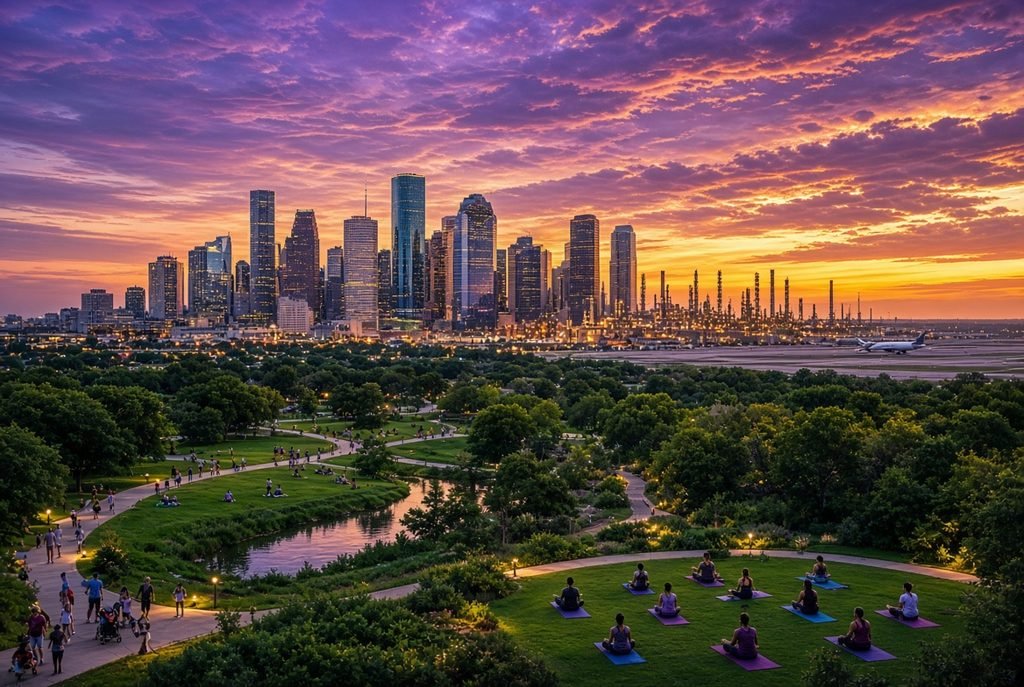
Houston has plenty of parks and outdoor spaces where people can walk, run, ride bikes, play sports, or spend time with family.
Hermann Park is close to the Texas Medical Center, Rice University, and the Museum District. The park has many popular places to visit. These include the Houston Zoo, Japanese Garden, Miller Outdoor Theatre, McGovern Centennial Gardens, and a golf course.
Memorial Park covers about 1,500 acres. It has walking and biking trails, sports areas, prairies, and wetlands. The park is popular with runners, cyclists, and families.
Buffalo Bayou Park covers 160 acres near downtown. Visitors can use walking and biking trails, enjoy gardens, see public art, have a picnic or visit the dog park.
Discovery Green is a 12-acre park in downtown Houston, Texas. It has a lake, event lawn, amphitheater, dog areas and spaces for families. The park is free to enter and hosts many events throughout the year.
The Houston Arboretum & Nature Center is a 155-acre nature area beside Memorial Park. It has about five miles of trails and offers a quiet place to see native plants, birds and wildlife.
Houston Attractions and Sports
Houston has many popular places to visit. Some of them are Space Center Houston, the Houston Museum of Natural Science, the Houston Zoo, and the Museum of Fine Arts, Houston, Texas.
Sports are also very popular in Houston. The Houston Astros play baseball at Daikin Park. The Houston Rockets play basketball at Toyota Center. The Houston Texans play football at NRG Stadium. Houston also has two professional soccer teams, Houston Dynamo FC and Houston Dash.
From parks and museums to sports and other attractions, Houston has plenty to see and do throughout the year.
Houston Texas Government, Healthcare, Events, Living & Local News
Houston is part of a much larger metropolitan area that includes Harris County and many nearby cities and communities. Government, healthcare, jobs, housing, events, and local news are all important to people who live in Houston, Texas.
Houston Government
Houston, Texas has a mayor and a city council. They run the city and make local decisions. The city government takes care of many services. These include police, fire services, roads, parks, libraries and permits.
Mayor and City Council

John Whitmire is the Mayor of Houston in 2026. He became mayor in January 2024 after winning the 2023 election.
His administration has focused on public safety, city services, roads and the city’s finances.
In June 2026, Houston City Council approved a $7.5 billion budget for Fiscal Year 2027. The vote was 15-1. The budget did not include a property tax increase.
Houston City Council has 16 members. Eleven members represent different districts. Five members are elected by voters across the city. The council works with the mayor on local laws, budgets and other city issues.
City Services and Houston 311
Houston has many city departments. They handle police, fire services, roads, parks, health, housing and libraries.
Residents can use Houston 311 for many non-emergency problems. People can use it to report some city service issues or ask for information.
For a police, fire or medical emergency, people should call 911.
The city also has an Open Data Portal. It gives the public access to different city data and information.
Houston and Harris County
Houston and Harris County are different places. Houston is a city. Harris County is a larger area that includes Houston and other communities.
More than 4.7 million people live in Harris County. The county includes 34 cities.
This difference is important when reading local news. A story may happen in Harris County but outside the Houston city limits.
The Houston area also has cities like Pasadena, Sugar Land, Pearland, Katy, Baytown, Missouri City, League City and The Woodlands. Each city has its own government and local services.
Healthcare in Houston
Healthcare is a major part of Houston’s economy and community. The city is known for its large medical community.
The Texas Medical Center is one of the most important medical areas in Houston, Texas. It has more than 60 member institutions and serves millions of patients each year.
The medical center includes hospitals, research centers and medical schools. It provides care for many health needs, including cancer, heart care, children’s health and surgery.
The Houston Health Department also provides public health services. These include health centers, disease prevention and other community programs.
Houston Events
Houston has events throughout the year. People can enjoy concerts, food events, festivals, museum programs and community activities.
The Houston Livestock Show and Rodeo is one of the city’s best-known yearly events.
Houston, Texas also holds festivals that celebrate different cultures. Local groups often organize markets, outdoor events and family activities.
Event dates can change. It is a good idea to check the official event information before making plans.
Living in Houston
Living costs in Houston can vary depending on the neighborhood and your lifestyle. Housing costs, in particular, can differ quite a bit from one area to another.
People can find apartments, townhomes and single-family homes in Houston, Texas and nearby communities.
Many people in Houston use cars to get to work and other places. Public transportation is also available. METRO operates buses, light rail and Park & Ride services.
Houston has jobs in many areas. Some of the biggest are energy, healthcare, technology, construction, manufacturing, retail and transportation. Aerospace is also an important part of the local job market.
Houston also has many neighborhoods. Downtown, Midtown, Montrose, The Heights, River Oaks, Third Ward and East End are some well-known areas.
The Houston Independent School District (HISD) is the largest school district serving the city. Other parts of the Houston area are served by different independent school districts.
Houston Local News
Local news keeps residents informed about what is happening across Houston and the surrounding area. Crime, traffic, weather, business, schools and government are common news topics.
Crime and police news may include arrests, investigations and major incidents. The Houston Police Department is an important source for police updates.
Traffic news is also important. Houston has many major roads and highways. A crash, road closure or construction project can quickly affect drivers.
Weather news can also change quickly. Heavy rain, thunderstorms and tropical weather can cause problems in the Houston, Texas area. People should check official weather sources for current warnings and forecasts.
Local news also covers fires, business changes, school decisions and city government.
As of September 4, 2026, Houston-area news includes reports about crime, traffic, weather, and local events. Since local conditions can change quickly, news reports should include the publication date and be updated when new information becomes available.
Official Sources, FAQs, Latest Houston Updates & Conclusion
Houston is a large and busy city. For local news and public information, it is important to use trusted sources. City services, police reports, weather, traffic and population figures can change over time.
Official Houston Information Sources
For city services, residents can visit the official City of Houston website. The Houston Police Department (HPD) shares crime and safety updates. The Houston Fire Department (HFD) provides fire, emergency and safety information.
The U.S. Census Bureau is the main source for Houston population data. The Census Bureau estimates that Houston had 2,397,315 residents on July 1, 2025. The 2020 Census counted 2,304,580 people.
For weather updates, people can check the National Weather Service (NWS). It provides weather forecasts and alerts. For road and traffic updates, TxDOT and DriveTexas are useful sources. Harris County also shares information about local services and government.
Frequently Asked Questions About Houston
What is Houston known for?
Houston is known for energy, healthcare, space, business, shipping and international trade. The city is also home to the Texas Medical Center, Port Houston and NASA’s Johnson Space Center.
How many people live in Houston?
The latest Census estimate puts Houston’s population at 2,397,315 as of July 1, 2025.
Where is Houston located?
Houston is in southeastern Texas, close to the Gulf Coast. The city is connected to the Gulf of Mexico through the Houston, Texas Ship Channel.
What county is Houston in?
Most of Houston is in Harris County. Parts of the city also extend into Fort Bend and Montgomery counties.
Is Houston the largest city in Texas?
Yes. Houston is the largest city in Texas by population.
What is Houston’s weather like?
Houston has hot and humid summers. Winters are usually mild. The city also gets heavy rain and thunderstorms. Tropical storms and hurricanes can affect Houston during hurricane season.
What are Houston’s major industries?
Major industries include energy, healthcare, aerospace, shipping, manufacturing, technology, retail and professional services.
Latest Houston Updates — September 4, 2026
Houston news today includes public safety, traffic and weather stories.
Public Safety: Police are looking into the deaths of a man and a woman in west Houston, Texas. Both were found shot at a leasing office at the Park at Woodlake apartments. The shooting happened in the 9500 block of Ella Lee Lane. Police are still investigating the case.
Traffic: Six people went to the hospital after a wrong-way crash in northwest Harris County. Authorities said the vehicle hit about six cars near Mueschke Road and FM-2920. The injuries were not life-threatening.
Weather: Houston remains warm and humid, with a chance of showers and thunderstorms. The National Weather Service forecast a high near 91°F on Friday, September 4, with a 60% chance of rain. More thunderstorms are possible through the weekend.
Houston remains one of the largest cities in Texas. Its population, economy, neighborhoods, and public services continue to evolve as the city grows.
For the latest news, residents can check official websites and trusted local news sources. Weather and traffic can change fast, so older reports may not show the latest situation.
Houston local news covers many parts of daily life, including crime, traffic, weather, business, government, and community events. Always check the date and source of a report to make sure you are reading the latest information.